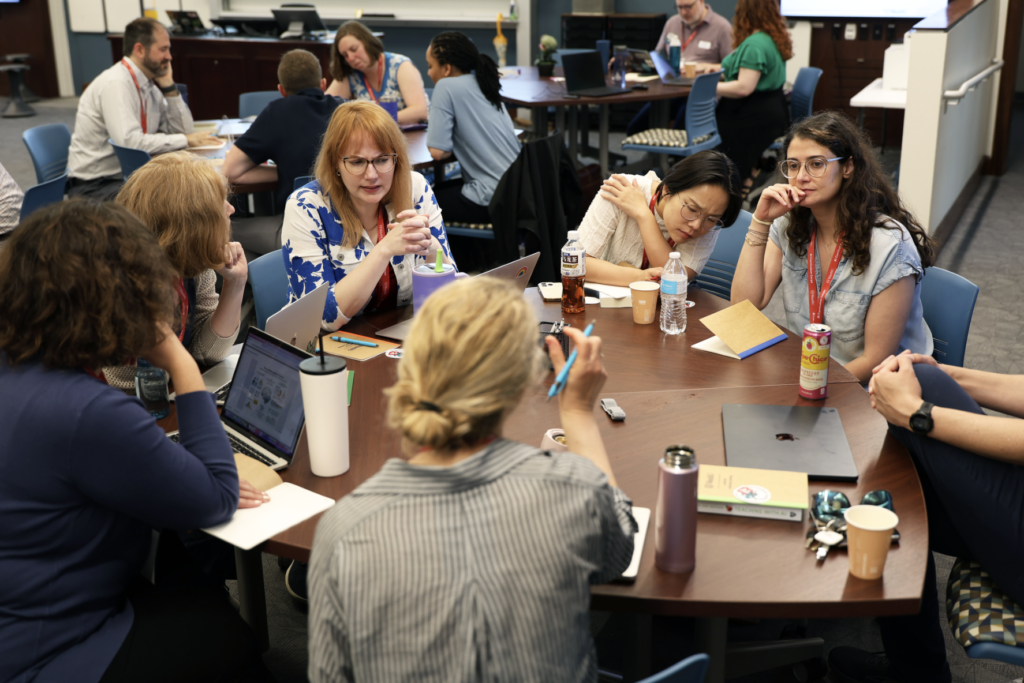
The AI Curriculum Corps is a summer program that equips faculty with resources and support to redesign or create new modules, assignments, and courses that thoughtfully integrate or critically examine AI.
Faculty will lead the design process supported by expert curriculum developers from the Center for Teaching and Learning, software developers from the Digital Intelligence and Innovation (DI2) Accelerator, technologists from Information Technology, and information scientists from the WashU Libraries. Student partners will contribute feedback throughout the iterative process and participants will have access to advanced AI tools, such as Gemini for Education, NotebookLM, and university-supported, custom tools to support their development.
Faculty will be awarded a stipend for their work.
During the five-day program, faculty explore course-development best practices, engage with AI tools available at WashU, and leave the week with a fully developed assignment or course ready to implement.
Two Tiers Available for Participation
Tier 1: AI-Integrated Assignment Design
Faculty will create or revise an assignment that meaningfully integrates AI into the student workflow or critically examines its implications within a field. Faculty will leave this experience with an assignment that has been reviewed by the CTL, peers, and students and is ready to deploy in the next iteration of their course.
Tier 2: AI-Integrated Course Development
Faculty will create or revise an entire course. Faculty will leave the program with a syllabus ready to submit to their program’s Curriculum Committee. Learning objectives and assessments will be reviewed by the CTL, peers, and students so that they are ready to deploy during Spring or Fall 2027.
Program Goals
The AI Curriculum Corps is designed to:
- Empower faculty to incorporate generative AI tools ethically, effectively, and creatively into teaching.
- Build campus-wide AI literacy, ensuring faculty and students are prepared to engage with AI tools today and in the future.
- Support pedagogical innovation across disciplines, from humanities to engineering.
- Accelerate course and assignment redesign by leveraging faculty-led workshops, technical support, and student feedback loops.
- Position WashU as a national leader in thoughtful and ethical integration of AI into curriculum.
AI Coursework in Progress
Explore examples of AI-informed assignments and courses developed by faculty in the AI Curriculum Corps and how they can be adapted to coursework across disciplines.
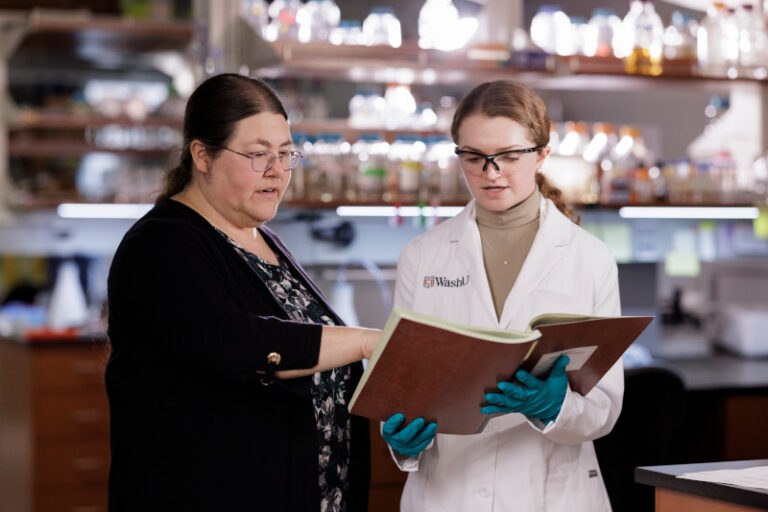
Simulating quality assurance reviews in technical writing
Engineering students use a secure generative AI model trained on course materials to critique their own technical writing drafts.

Decoding disaster: AI research loops meets human ethics
Students choose a historical extreme weather event and use NotebookLM to build a factual timeline, sort research into “factual” and “trauma-informed” categories, and then independently identify whose experiences are missing from the record.

Data do or data don’t? An AI-assisted data ethics audit
Students test a project dataset against data ethics and privacy standards, then use a university-approved AI tool to check it against FAIR principles, feeding the AI both their data and key institutional guidelines.
Updates
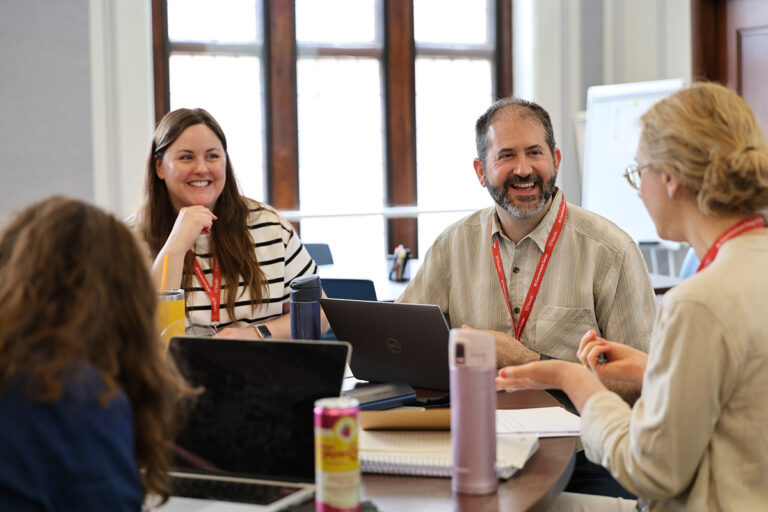
A new toolkit for teaching in the age of AI
Anna Cunningham from the Center for Teaching and Learning is creating space for faculty to question and test AI in WashU courses and assignments.
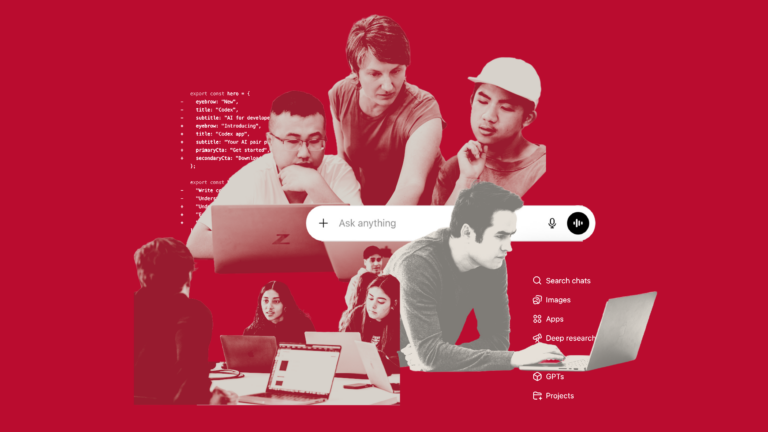
More than 80 faculty proposals selected for AI Curriculum Corps, shaping how AI enters the classroom
The cohort highlights a wide range of approaches and perspectives, positioning AI as both a tool for curricular innovation and a subject of critical inquiry.
Call for Proposals
Tier 1: AI-Integrated Assignment Design
Tier 1 supports faculty in creating a new assignment that incorporates AI into an existing course without changing the course’s core learning objectives.
Participants redesign or create a major assignment or assessment that integrates AI tools or methods in ways that enhance student learning, critical engagement, or disciplinary practice.
The application window for the summer 2026 program has closed.
- What to Expect
-
Tier 1 includes:
- One week of in-person workshops (half-day sessions) consisting of:
- Assignment development expertise from CTL on learning objectives, rubric design, and pedagogical alignment.
- Peer cohort feedback in structured review cycles, with the possibility to maintain engagement throughout the semester.
- Technical support from DI2 and IT staff (AI tool development, model selection, prompt engineering, etc.).
- Student feedback sessions to pilot draft assignments from a user perspective.
- Library support for field-specific research or literature reviews.
- Stipend: $1,500 per participant.
- Access to university-supported AI tools, including generative AI environments, chatbot builders, and custom tool development.
- One week of in-person workshops (half-day sessions) consisting of:
- What We Ask of You
-
Tier 1 participants are expected to:
- Propose an idea for an AI-integrated assignment or assessment.
- Attend all in-person sessions of the weeklong workshop.
- Engage in peer review sessions and student feedback cycles.
- Produce a complete, classroom-ready assignment, including the assignment description, learning objectives, and assessment rubric, then assign it in a class during the academic year, and evaluate the assignment’s efficacy.
- Participate in opportunities for sharing lessons learned and reusable assignments/modules with WashU faculty.
- Program Timeline
-
- Call for proposals released: Feb. 25, 2026
- Application deadline: April 9, 2026
- Participants notified: April 16, 2026
- Workshop Week: May 18 – 22, 2026 (morning sessions)
- Mid-semester check-in: Fall 2026, during your availability
- Examples
-
The examples below offer a few possibilities but should not be interpreted as boundaries for what is possible or encouraged.
- An assignment using generative AI to help students analyze, critique, or improve drafts, models, or designs and reflect on the limitations and bias of the tools.
- Assigning students to design a chatbot that embodies a historical author, theoretical perspective, or institutional role using primary sources, which they can interrogate, critique, and refine.
- A project incorporating AI tools into data analysis, coding, creative production, or simulation workflows.
- Students use AI to model or explore a complex system or scenario (e.g., population trends, environmental impacts, market dynamics), testing how changes in inputs affect results and explaining implications.
- An assignment that thoughtfully integrates AI into the writing process via scaffolding, peer review, and AI feedback.
- Students use AI to create a graphic novel depicting a biological process or historical event.
Tier 2: AI-Integrated Course Development
Tier 2 supports faculty in designing a new course or substantially redesigning an existing one in which understanding and/or applying AI within the discipline is a core learning objective. Participants will produce a draft syllabus and course framework ready for submission to their program’s Curriculum Committee.
The application window for the summer 2026 program has closed.
- What to Expect
-
Tier 2 includes:
- One week of in-person workshops (half-day sessions) consisting of:
- Course development expertise from CTL on course design, writing learning objectives, assessment design, and pedagogy.
- Peer cohort feedback in structured review cycles, with the possibility to maintain engagement throughout the semester.
- Technical support from DI2 staff and WashU IT (AI tool development, model selection, software development, etc.).
- Student feedback sessions to pilot draft assignments from a user perspective.
- Library support for field-specific research or literature reviews.
- Virtual check-ins throughout the summer, including options for student feedback sessions.
- Stipend: $10,000 per participant.
- Access to university-supported AI tools, including generative AI environments, chatbot builders, and custom tool development.
- One week of in-person workshops (half-day sessions) consisting of:
- What We Ask of You
-
Tier 2 participants are expected to:
- Propose a concept for a new or significantly redesigned course where AI is integral to the learning objectives.
- Attend the week of in-person workshops and participate in summer virtual check-ins.
- Produce a draft syllabus by August 14 and refine it for Curriculum Committee review.
- Engage actively with peers, CTL, DI2, students, and campus partners involved in the Curriculum Corps.
- Commit to teaching the course in Spring or Fall 2027 (pending Curriculum Committee approval and timelines).
- Participate in opportunities to share lessons learned and reusable assignments/modules with WashU faculty.
- Program Timeline
-
- Call for proposals released: Feb. 25, 2026
- Application deadline: April 9, 2026
- Participants notified: April 16, 2026
- Workshop Week: Jun 1 – 5, 2026 (morning sessions)
- Virtual Check-ins: July 10, July 31, and August 14
- Target course launch: Spring or Fall 2027
- Examples
-
The examples below offer a few possibilities but should not be interpreted as boundaries for what is possible or encouraged.
- A course focused on the past, current, and future application of AI within a field.
- A course exploring types of AI bias, how they arise, and how they might be addressed.
- A course interrogating current policies and lawsuits pertaining to AI use as case studies.
- A law, policy, or journalism course where students audit algorithmic decision systems and propose improvements grounded in accountability and fairness.
- A history or literature course in which students critique AI models trained on curated archival texts to explore how perspective, omission, and bias shape historical narratives or literary interpretation.
- A design, architecture, or creative arts course in which students collaborate with generative AI to prototype visual, spatial, or audio artifacts and critically assess authorship, originality, and creative control.
- A psychology, education, or human-computer interaction course where students design and test AI-mediated interventions, then evaluate their impact, limitations, and unintended effects on human behavior or learning.
- An engineering course in which AI models are created to address novel issues.